
Intake & metadata automation
Automates incoming link intake and extracts title, source, date, and section into structured editorial records.
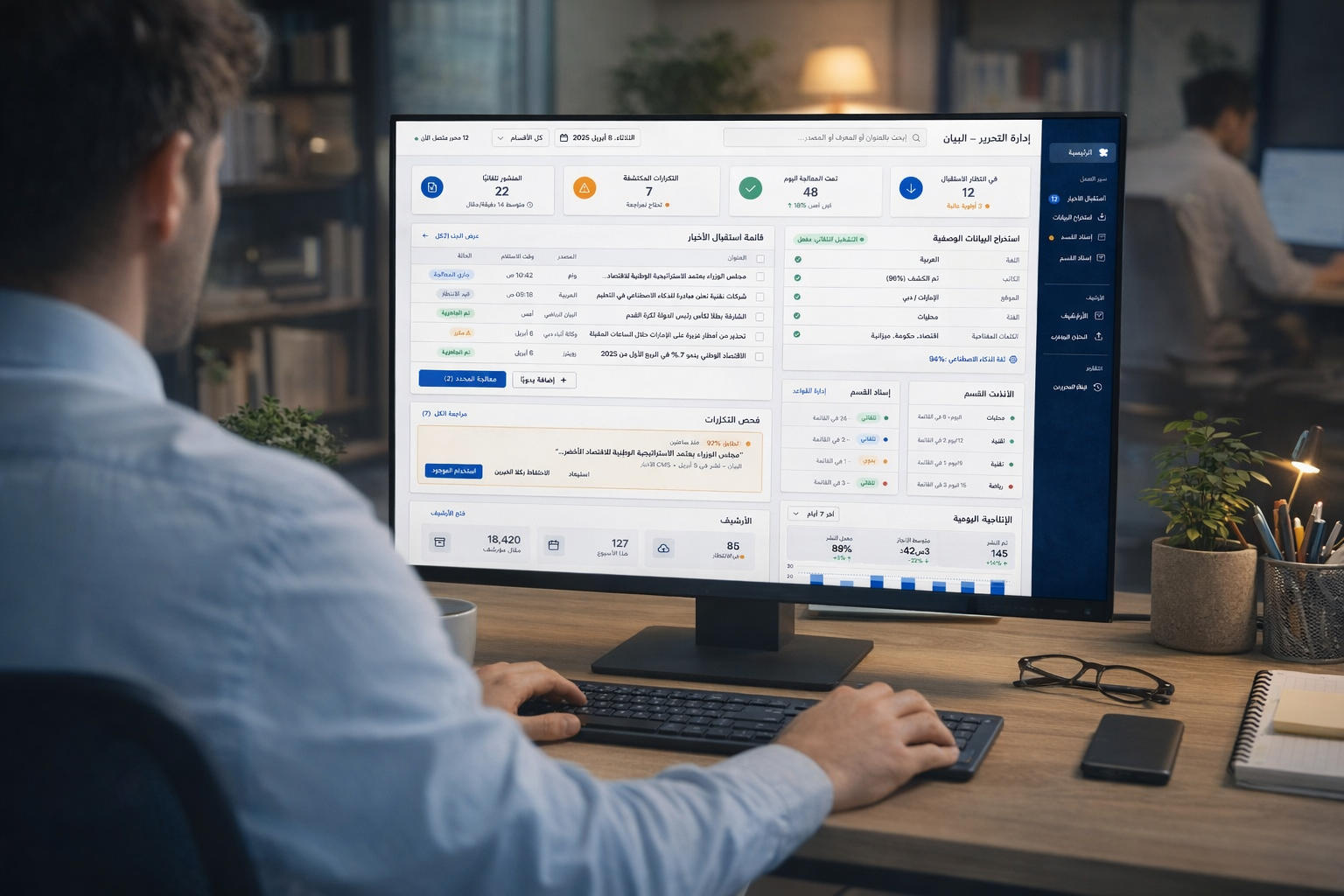
Editorial Operations, Archiving & Performance Analytics System
Al Bayan is a major news platform within Dubai Media, where the electronic editorial environment requires structured operational tools to help editors process incoming materials, reduce repetitive work, improve archiving speed, and monitor editorial output more effectively.
This program was developed as a custom internal system for the Electronic Editorial Department at Al Bayan. It was designed to support the daily editorial workflow by automating link intake, extracting article data, identifying content type, assigning the appropriate section, detecting duplicates, recording insertion time, organizing editor activity, and improving the speed and structure of editorial archiving. In addition, the system introduced a performance-monitoring layer through statistics and visual reporting, helping management track productivity across the editorial team.
The editorial team needed a faster and more controlled way to handle incoming links and source materials without depending on repetitive manual entry. The workflow also required clearer tracking of each editor’s activity, stronger duplicate control, more organized archiving, and a measurable way to assess performance against the department’s expected daily output.
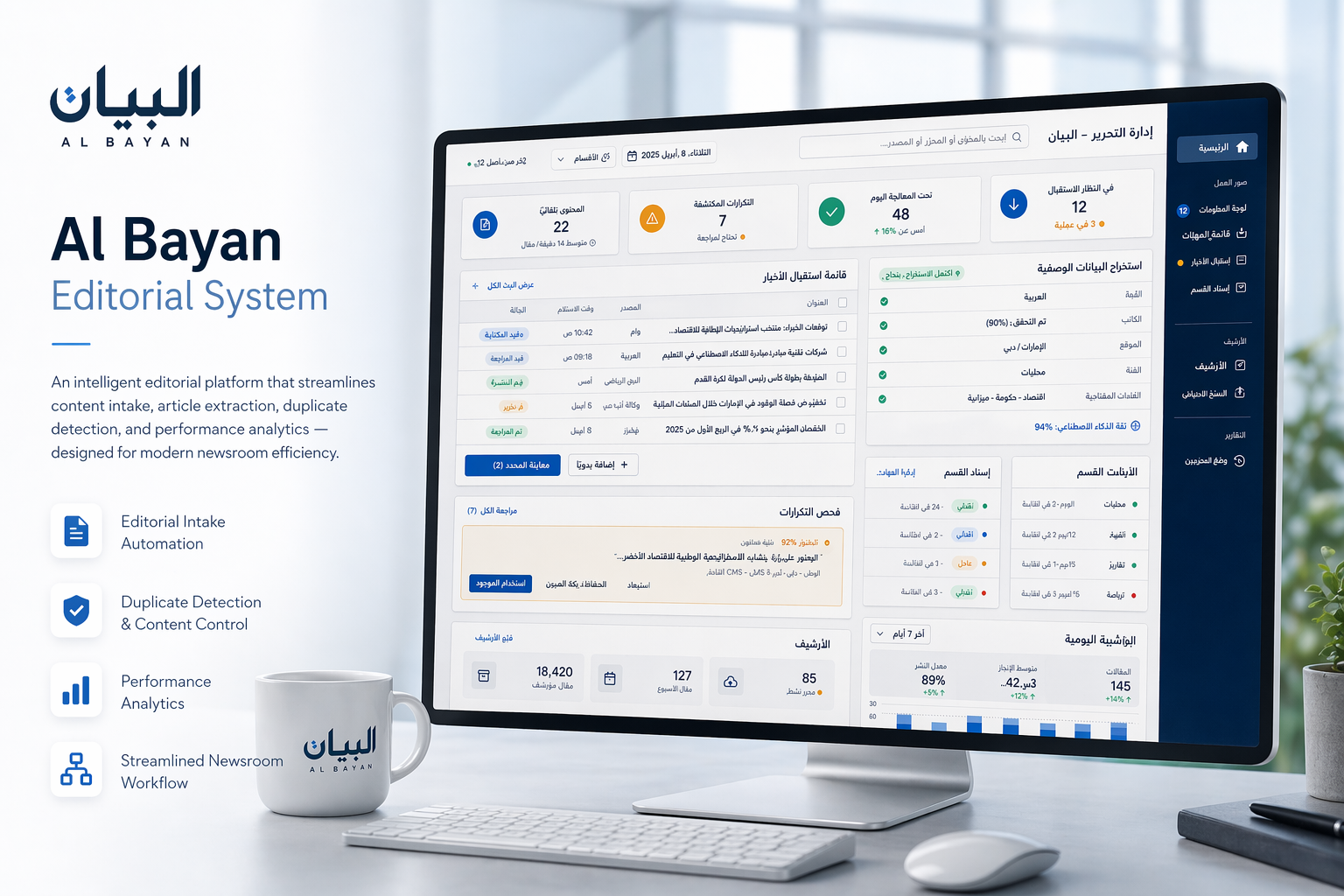
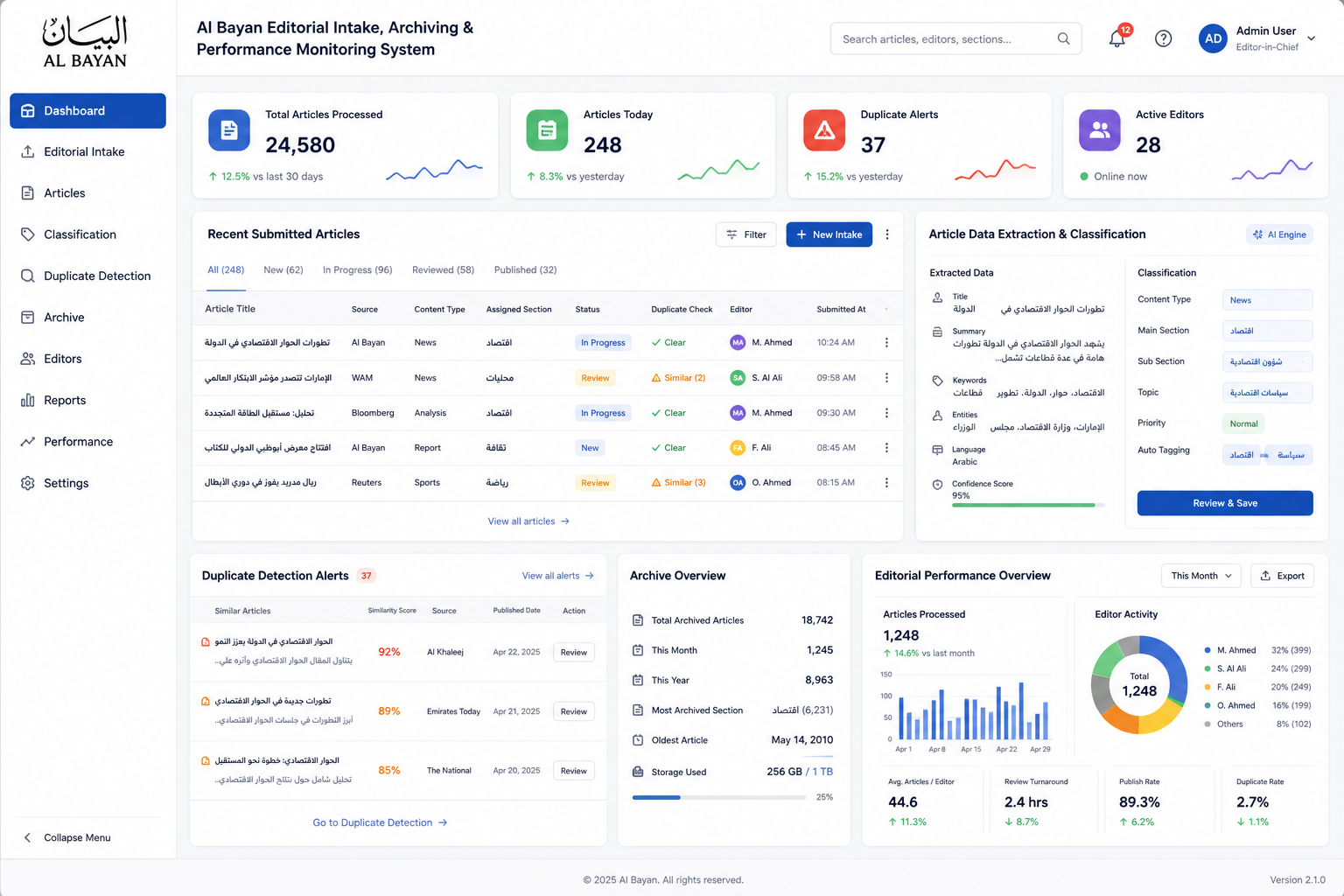
A custom internal editorial operations system was built to automate the first stage of the digital publishing workflow. Once a link is entered, the program extracts the title, source, date, and section, classifies the content type, checks for duplicates within and across editor workspaces, records the insertion time, and organizes the item inside a structured editorial environment. On top of this workflow layer, the system provides performance analytics and visual indicators showing whether an editor fell below, met, or exceeded the defined daily target. The minimum required output is configurable and can be set or adjusted by the administrator according to editorial policy.
What makes this project especially strong is that it was not just a content-entry tool. It functioned as both an operational and analytical system inside the editorial environment. It automated the intake of incoming materials, reduced the time spent on archiving, minimized duplicate work between editors, tracked each editor’s activity, and added a performance-monitoring layer through visual indicators and statistical reporting.
Automates incoming link intake and extracts title, source, date, and section into structured editorial records.
Identifies content type, assigns the appropriate section, and detects duplicates within and across editor workspaces.
Records insertion time and organizes each editor’s activity inside a structured chronological archive.
Tracks daily targets, compares editor productivity, and provides visual reports across daily, half-monthly, monthly, and yearly periods.
The program delivered direct operational value by reducing the time spent on content intake and archiving, lowering duplication between editors, improving the organization of incoming materials, and making each editor’s daily activity easier to track. At the same time, it added managerial value through performance metrics and visual reports that helped monitor productivity, measure compliance with the defined editorial target, and support better decision-making inside the editorial workflow.
We build practical software systems around real workflows, operations, and long-term business needs. Let’s talk about the right structure for your next project.